Categories
bbcqt

BBCQT 2014.01.30

Q: Will the revival of the 50p tax rate lead to the wealthiest individuals leaving the UK? 

A: No, the revival of a 50p rate will not lead to the wealthiest individuals leaving the UK, they have already left the UK and currently claim non-dom status.

Tax evasion and avoidance currently costs the UK Treasury around £18 billion a year, which is 1,000 times more money than is expected to be raised from increasing the maximum rate to 50p. The majority of this is facilitated by tax havens sheltering under the umbrella of the U.K.’s excellent legal system. We can and must do whatever is possible to prevent the ultra wealthy from claiming some form of noncitizen status, avoiding all taxes. LIFE will levy income taxes on all UK citizens’ worldwide income – just like the United States of America does for its citizens. 

LIFE will have a maximum rate that will not exceed 50p, because we understand that anyone who succeeds in earning a lot of money in the UK does so because we have the social, legal, and economic infrastructure in place, that the citizenry of the country have paid for, and that enables them to make a lot of money. Anyone who thinks they can earn the same amount of money, and enjoy it as peacefully, in some other place around the world should go there.


Q: If you have chosen to live below sea level in Somerset, is it reasonable to assume you will be flooded?

A: Yes, of course, but if that is the only question you ask, you have missed the point. It is not the fact that these areas have flooded that is the issue, it is the severity and the extent of the flooding that is the problem being highlighted by those living in the affected area. To leads to 2 questions: one is, why is the flooding so bad this time, and the other is why hasn’t more been done to mitigate the problem? The answer to both of these questions is substantially found in the fact that we have an overly centralised country, and trying to run everything out of Whitehall in London is never going to provide the appropriate solutions or the efficient use of the resources available. We can and must push more responsibility and money down to local and regional governments so that they can apply the necessary solutions to their specific circumstances.


Q: Should foreign-born criminals be able to have their citizenship revoked?

A: Citizenship is not something that any country should be able to revoke for any citizen. Whenever any citizen commits a crime, be that a terrorist type of offence or any other, then it is the country’s responsibility to use their legal system to prosecute the offender. And I speak as a foreign-born citizen, can you make a distinction between me and some other kind of citizen to which this rule to be able to revoke someone’s citizenship would be applicable? 


Q: Is the UK government doing enough to help Syrian refugees?

A: is the UK doing enough to help any people around the world who are suffering? I would argue that the most important thing in the UK can do to help people around the world is to set an example, by getting our own house in order by protecting the liberty of the people who live in this country, and by establishing a cohesive society that can be an example to people around the world. We make money by selling arms and military assistance to governments all over the world, and our asylum system is a disgrace and a mess. There is plenty that we could be doing that would be far more important than a few hundred refugees here or there. 

If there are communities in the UK would like to extend their arms and welcome in refugees, and to take care of them and provide the facilities and resources necessary to support their productive lives, then that that is a welcome and noble offer.


Q: Is banning smoking in cars with children present an unnecessary infringement of personal freedom?

A: Yes, it is. Generally the rule of law should concern itself only with the harm done to another by one person’s actions. Now parenting represents a special case, and we all have a natural empathy for children in respect of the fact that they are the wards of their parents and, therefore subject to the discretion and behaviour of those parents. The answer in these situations is education, education, education. I don’t want to live in the country in which the state believes it can write laws that are a rulebook on parenting. Personally, I feel as strongly about the situation in which I see parents taking their children into fast food restaurants to stuff them with unhealthy food, if you can even call it food.


 

Categories
change ConDem economics enterprise labour politics

Snakes can’t jump

Snakes can’t jump – why voting Labour in the next election won’t make any difference

“Lemmings, left!” ~ heard from the back of the pack as they hurtled towards the cliff.

Across the industrialised or ‘advanced’ world there is a dearth of new ideas and a consequent absence of solutions for, and discussions about, the real problems facing us.

Our demographics are approaching post-industrial new normals. Our economies are still dependent on exploitation of resources or labour, or both. Our societies are structured to combat the scourge of parochial narrow-mindedness, but not take advantage of inter-connected communities.

The existing political parties are devoid of brilliant thinking in the face of enormous challenges, offering 20th C, or even 19th C, solutions for our 21st C problems. Neither “growth” on a finite planet (with increasing competition for resources), nor simply paying ourselves more, nor the white knights of private enterprise are 21st C ideas let alone solutions, and the general public knows this.

We stand before the chasm of the next financial calamity, dressed only in our grandfathers’ long johns. We need fresh thinking that leverages the modern world and all of the opportunities that can only be ours in the 21st C because we have the benefits of the industrial, technological and information revolutions behind us.

We cannot afford to go into the next election like we are now.

Central to our legacy political parties’ internal problems and the disconnect between their policies and reality is their failure to grasp the true nature of human society, and our evolution in the continuum of this planet.

“Business” is a classic example of this disconnect. Neither left nor right places this vital human function in its appropriate context. The left has traditionally seen the economy in terms of objective components to be arranged on a chessboard, but not understood in any meaningful way. New Labour was simply a capitulation to the traditional right-wing perspective, which recognises the “animal spirits” inherent in business activity and in the economy, but does nothing to understand context.

Pushed to the limits of their policy framework, confronted with its evident failures, both sides tends towards the notion that businesses can be seduced or encouraged into fulfilling a social responsibility. This is a fundamental misunderstanding what business is, it is the equivalent to suggesting that snakes can jump. (Indicative of this problem was the response I received once to a posting in a comments section where I suggested that snakes couldn’t jump, in which the responder said that snakes could jump, and that they did have legs, and that our responsibility was to help snakes understand that they did have legs.)

A decent and functional understanding of the true nature of life recognises that “business” is a term we used to refer to a perfectly natural set of behaviours that are related to living in a resource and time constrained world with many various needs. And as a natural set of behaviours the correct approach is to understand their context and function, rather than trying to suggest that they should be redirected in some other direction. Once a set of behaviours has been understood in its context, then one can determine if those behaviours become inappropriate because they have left their natural context. This understanding is completely absent from both left and right, without that understanding both of our legacy parties employ, deploy and allow business to operate outside of its context, with negative results for our entire society.

These parties, whose foundation for policy is so pathetically absent of real understanding, are completely useless at developing solutions to our problems. The Conservatives will attempt to deploy snakes everywhere, and when confronted with its failures, they will suggest that they are training a new subset of the species that has legs. Labour will draw lines in the sand, and tell the snakes that they are only allowed in certain areas, and that there are certain of the lines over which they must jump. It’s madness either way. 

And this is but one example of where our legacy parties are completely failing to grasp the real issues. Frankly, it doesn’t make any difference which one of them you vote for, none of them is actually going to solve any of the problems.

Choose LIFE!

Categories
change

Proper Change – A Path, Not a Destination

Proper change is a continuous process. “Change is the only constant”, and a well founded human society incorporates this truth into the foundations of its structures.

LIFE-cycle

There are three important points to grasp about the ‘proper change’ that LIFE is proposing:

  • The reform of our social and economic structures is to provide more effective delivery mechanisms, and at the same time are more accessible and available to the process of change in the future.
  • The objectives that we propose are not imagined as final destinations, but rather as the next best radical evolution that we can imagine now.
  • Our proposals are deliberately non-prescriptive in various matters, precisely because we understand and expect that the specific solutions to the specific manifestations of those problems will vary, and will be best prescribed in the place and time that they are experienced. Our determination to empower local communities is derived from this understanding.

LIFE’s primary objective is to create a more sustainable human society, and sustainability is dependent on resilience, and resilience is the ability to cope with change. As described quite elegantly by Mr Unger at the RSA, a “high-energy democracy” is vital, because it is the manifestation of humanity’s highest evolution: communal decision making. Our ability to make diversity work for us in collective decision making was forged in the adversity of evolutionary change. And LIFE’s proposals for the reformation of our democratic structures aim to bring us closer to the effective practice of high-energy democracy – not for it’s own end, but because it is a means to adapt and change without depending on crisis as a catalyst.

Proper change means focusing on the structures that shape our lives, with the understanding that those structures determine the framework within which all else is settled. There are millions of good people doing excellent work on the many problems that we have in our society, but we all need structural change to facilitate proper solutions. LIFE intends to provide the rallying point for everyone who can see that structural change is needed, and that structural change is what will enable a multitude of good works to bear fruit.

LIFE’s proposals are not a “blueprint” for modern society; they are a line drawing in B2 pencil, and they are supplied with extra paper, rubbers and pencils for all. (International editions are supplied with erasers.) The flexible, devolved, high-energy democracy that we propose is our guarantee that many solutions will evolve, and we will all be free to adopt and adapt the best solutions for ourselves. We propose reformation of our structures that enable radical evolution, and expects further reformation of the structures themselves.

Proper change does not acknowledge a closed list of options, and LIFE rejects the notion that we have to choose between revolution and the status quo. We believe that there is a nexus of aspiration and realism, we see that we can engage in proper change that builds on what we have, and is not constrained by where we have come from or define where we can get to.

Proper change will raise the ordinary lives of ordinary people, and that will be the criteria by which it can be judged. That standard is not confined to a material realm, but rather a greater ambition for more generalised involvement, empowerment and engagement by one and all in the common fortunes of all. Deeper participation in our common democracy, more abundant contributions of art and innovation, and the development of a common sense of purpose and outcome will be the true measures of proper change.

Join us to build a path to a future worth living.

Categories
Uncategorized

WellFair Value Survey

Thank you for participating in our survey about the value of WellFair services to you. Your input will be vital to establishing a new direction for economics, politics and society.

This survey will only take you about 2 minutes, and can be completed anonymously. Please ask your friends to fill one out too.

Go back

Your message has been sent

Warning
Warning
Warning
Warning
Warning
Warning
Warning
Warning

Warning.

Categories
Uncategorized

And, not Or

Those advocating personal salvation as an alternative to civic engagement have fundamentally misunderstood the nature of their species.

Humans are a group species made up of complex, choosing individuals. Seen from an aeroplane we look and behave very much like ants. Seen through our own eyes we look and behave like individual spirits. Both perspectives are true, and to side with one view exclusively is to miss the big picture.

Civic engagement requires the humble recognition of our mutual interdependence, and the demotion of ego in the face of the reality of group decision making.

To assert the abandonment of civic engagement betrays an immaturity that advocates of that view would be embarrassed to observe in themselves. Promoting self improvement as an alternative to civic engagement requires an almost unbelievable degree of intentional ignorance about the lives and practices of every great spiritual leader from every great tradition. Buddha, Jesus, Moses, Mohammed, MLK and Ghandi, all devoted their lives to civic engagement – they saw their personal enlightenment as a stepping stone to understanding the web that connects all humanity, and indeed all life, into a single tapestry. Their personal, inner peace gave rise, inexorably, to a desire for common peace.

Obviously the quality of civic engagement, and the usefulness of anyone’s contributions to the group, are weighted by the degree of their individual awareness, mindfulness and inner peace. This goes without saying, and is neither revelatory nor particularly insightful.

The truth is that we must do both. We must strive for the deepest understanding and inner peace we can, and we must engage with our contemporaries in the pursuit of common understanding and common peace, at the same time. One does not precede the other, one is not dependent on the other, they are simultaneous and interdependent, in the present time reality of now.

So, please, don’t sit this one out. We need you, and your hard won personal liberation. Join in, we promise our unawareness and unmindfulness can only serve as training to hone your inner peace.


Categories
budget change crisis debt Democracy problems

Common sense for Proper Change

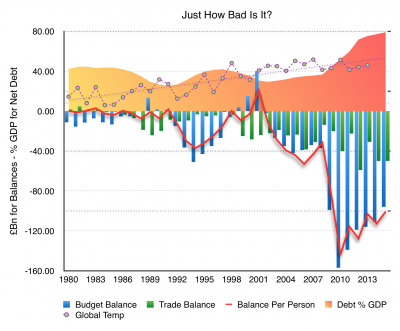
It may not feel like it right now, but we are in desperate straits, and in need of radical change if we are to maintain the society that we have built over the last 300 years.How Bad Is It graph

Britons deserve the right to choose a proper solution at the next general election, and that is why we have formed the LIFE Party.

Slashing at our social fabric, or paying ourselves more, cannot be the only two alternatives on offer in the nation that used democracy and freedom to spawn the greatest advances in human accomplishment. In a time where balance is so desperately needed, between man and planet and between ambition and compassion, simply loading one side of the scales is a betrayal of our proud history and our potential future.

Categories
Uncategorized

LIFE Support

Leave us your message of support using the form below. Thank you!

Categories
budget debt economics problems WellFair

We have to solve the real problems

The real problem is that we are not running a working system.

  • Not economically or financially.
  • Not socially.
  • Not environmentally.

Economically we are not balancing our books, and using debt to plug the gap. And we are paying millions of people to do nothing, in a society were simply existing is expensive, financially and environmentally.

Socially we are not nurturing the cohesion, understanding and specialist skills we need.

Environmentally we are not moving off fossil fuels fast enough.

We are still in the process of figuring out how to make it all work. How to provide a decent standard of life, how to do that in line with a working economic system, and have that system provide enough room to invest in future infrastructure that is sustainable.
We, obviously, have not figured out the big stuff yet.

Collecting taxes to pay for social security and fund national infrastructure looked like the solution. But that was back in the beginning of the 20th C when resources were cheap and demographics were in a special state. Now resources are expensive and we are arriving at a natural demographic balance.
Taxes alone will not generate sufficient revenues to pay for our society and the investments we need to make. This has been true for 50 years. We need to face his fact.

  • GDP growth is not the answer because we still have an old economy based on fossil fuels, and an old structure that suppresses sustainable micro-economic activity.
  • Increasing wages is not an answer either. It does not address any of the major problems, it is not practical, and it assumes there is enough wealth to pay for all our needs. But as we have already said, we have higher social needs (with progressive demographics) than our economy can afford to generate taxes to pay for.
  • Increasing taxes will not do it either. We are already close the maximum tax rate an economy can withstand before it starts contracting. Some increase is possible, but it’s not enough to bridge the gap between our needs and our resources.

How do you meet expanded social needs at the same time as investing in the future, when you’re not generating enough taxes already?

You revert the social contract to its natural state.
The social contract over the long arc of human history has always been to guarantee a basic, decent life to all members of the group. We need to revive that contract. The social contract is not about money, it’s about a decent LIFE. The social contract is a guarantee of services, not cash. A guarantee of shelter, sustenance and access to basic services such as transport, health care and education.

Reverting to the natural social contract has a transformative effect on our finances. It reduces the cost of life, and it makes investment more affordable. It does this because it costs us less, as a society, to deliver basic life services than it does for each individual to buy the same services on their own. Every £1 it costs us to deliver basic services is worth 3 or 4 times as much to the recipient. So we trade pay for services, which reduces the cost of the services, which in turn means that we have to raise less taxes to pay for the same amount of service.

A natural social contract delivers better services, to more people, at lower cost. It brings our finances into balance, using a reasonable tax to fund affordable services. And it makes investment cheaper by lowering the cost of basic labour. Finally, and most importantly, it changes the relationship to work, from one of coercion for survival, to one of voluntary contribution for reward.

All this requires surprising little change and upheaval. We simply need to spend 3 years rolling out local community services for free food, local transport, Internet and basic phone services. These compliment the existing free healthcare, education and shelter services that we already provide. The rest of the benefits flow naturally without legislation. Wages fall of their own accord, micro-businesses start on their own, and the benefits of efficient resource use accrue naturally.

Making these changes is what LIFE is all about. We are about facing the big and real problems, and delivering solutions that will take us through a period of change as gently and peacefully as possible.

Categories
budget economics

Dependency & Tax

There is a direct link between dependency ratios and tax rates, and this limits the extent to which a mature human society can be capitalist or commercially-dominant.

How Bad Is It graphFirst of all, let’s assume that the total activity necessary to support an individual person remains constant throughout their life. Babies and really old people need lots of care and attention, young kids in school need lots of resources, and working age people consume lots of resources in their productive activities, like commuting and training, as well as needing help with all the other stuff they don’t have time to do because they are working. So if every dependent uses 1 unit of activity, that unit must be generated by a productive person.

sus_econ_demographicsThe more old people there are, and the longer we have to educate our children to make them productive members of our society, the higher the “dependency ratio”. That is the percentage of people of productive, working age versus the percentage of people who are too old to be productive, or who are too immature to be productive. If 50% of people are dependent, then the remaining 50% have to pay 50% of their production in taxes to provide for the 50% that aren’t working (and they have to generate 2 units of wealth, 1 for themselves and 1 for the taxes to pay for a dependent).

Pre-industrial societies had low dependency ratios (~27%) because people died before they stopped being productive and young people became productive members of society at a very young age, at 12 years old or even younger. Around 1900 in the UK this ratio went up to 34%, because young people had to stay in school longer to be effectively productive, but there was no increase in overall production because life expectancy remained low at 47. In 1950 the ratio dropped to 31% because life expectancy rose to 70, adding 18 years of productive lifespan and only 5 years of retirement. By 2000 the ratio leapt up to 44%, because life expectancy rose to 82 (adding 12 dependent years) and most young stayed in education through their early 20s. Once life expectancy reaches 90, and young adults stay in education until they are 22, and even if people are productive until the age of 67, the dependency ratio reaches 50%. In practice every human society has around 5% disabled and sick people of productive age at any given moment, so we are already at or above the 50% dependency mark now.

Now we have dependency ratios of around 50%, and that means tax rates will have to approach 50% to pay for our social security (i.e. to pay for all the non-producing young, old and sick). Trouble is that tax rates above 40% reduce economic performance, and create a downward spiral that cyclically reduces economic performance and tax revenues. Most of the factors in this equation are beyond our control: the cost of materials is fixed globally, the cost of energy is high, and to invest in renewable energy also costs lots of money. The only factor that is really under our control is how much we pay ourselves. The more we pay ourselves, the more expensive we make our lives. Because so much of what we do and what we need includes the labour of someone else, pushing up wages just makes life more expensive. Because a large-scale human society is effectively dependent on socialised security (as opposed to family or tribal security), and because social security services contain a high proportion of labour, the cost of labour is directly related to the amount of taxes that need to be raised to pay for social security. When social security is provided by family or tribe, the vast majority of the labour is not paid for, it is provided as a social service in a conscious or unconscious trade for mutual security. Emulating that social trade of “labour for security” is the key to making our modern, large-scale societies affordably secure. But how?

The answer is more simple than you might imagine. Provide social security without charge. Just meet the basic survival needs of every person, and they will accept that security in lieu of fully-loaded wages. It’s a trade we have made consciously and unconsciously for generations upon generations, it is built into our DNA, and it is millennia older than any modern invention of the monetary-industrial-technical-information age. In fact it is so old and so deep that it has probably just floated past you, without you realising that it is the solution to our modern economic dilemma. So here it is again: provide everyone with the assurance of social security for free, and we will make our entire society affordable. Wages will come down, and we will be happy with that. We will accept the assurance of shelter and a decent meal in lieu of a surprisingly large portion of the wage we would have otherwise demanded without that assurance. And in so doing we make our social security cheaper, and we make investment cheaper at the same time. Everything that contains labour becomes cheaper.

The social trade of “labour for security” decreases the percentage of total activity in our society that is exchanged for money, i.e. is commercial. This table shows the extent to which all activity in a society can be commercial depending on the dependency ratio at a specific tax rate. The higher the dependency ratio, the higher the tax rate has to be to pay for the dependents. The less activity that is commercial (exchanged for money), the lower tax rate can be, because taxes are only needed to pay for the portion of dependent support that is paid for with money.

Max_commercial


The data:

Maximum Commercialisation Rates

Dependency

Tax Rates

Ratio

40%

37%

35%

25%

20%

25%

160%

148%

140%

100%

80%

35%

114%

106%

100%

71%

57%

40%

100%

93%

88%

63%

50%

45%

89%

82%

78%

56%

44%

46%

87%

80%

76%

54%

43%

47%

85%

79%

74%

53%

43%

48%

83%

77%

73%

52%

42%

49%

82%

76%

71%

51%

41%

50%

80%

74%

70%

50%

40%

51%

78%

73%

69%

49%

39%

52%

77%

71%

67%

48%

38%

53%

75%

70%

66%

47%

38%

54%

74%

69%

65%

46%

37%

55%

73%

67%

64%

45%

36%

56%

71%

66%

63%

45%

36%

57%

70%

65%

61%

44%

35%

58%

69%

64%

60%

43%

34%

59%

68%

63%

59%

42%

34%


Categories
change Freedom Representation

LIFE Believes

  1. LIFE believes in the ability of people to find the solutions they need in their community, and we will support them by giving them local control and a direct distribution of Income Taxes.
  2. LIFE believes that society is based on a citizen contract, a promise between citizens to provide a basic standard of life to everyone.
  3. LIFE believes that a resilient society is a sustainable society, and that the future is to de-centralise government and empower communities to build their own capacity and self-reliance.
  4. LIFE believes that we cannot have a future worth living if we do not respect the freedom of the individual, and understand the incredibly important value of diversity, specialists of all kinds and all the contributions of every citizen.
  5. LIFE believes that our future must be built on the best parts of the industrial, technological and information revolutions, and we will seek to leverage science, engineering and technology to create a better world that generates less waste and more joy.